How Babies Learn Before They Can Speak: Inside the Infant Brain
Babies don’t need words to learn. In fact, some of the most important learning in human life happens long before speech begins. From recognizing voices to predicting routines, infants are constantly processing information. This early phase plays a massive role in infant brain development and sets the stage for thinking, communication, and emotional intelligence later on. So what’s really going on inside that tiny head? Let’s find out.
The Infant Brain: A Learning Powerhouse
A newborn’s brain is incredibly active, even if the baby looks like they’re just eating and sleeping.
Infant Brain Development in the First Year
During the first 12 months, the brain forms over one million neural connections every second. These connections build the foundation for movement, memory, emotions, and learning. Experiences, both big and small, literally shape how the brain is wired.
Neuroplasticity and Infant Cognitive Development
Neuroplasticity allows the brain to adapt based on experience. This is why infant cognitive development is so sensitive to interaction, play, and emotional connection. Babies aren’t passive; they're constantly updating their understanding of the world.
Learning Without Language: How Is It Possible?
Learning doesn’t require words. It requires experience.
Sensory Learning Fuels Early Cognitive Growth
Before speech, babies rely on their senses to make sense of the world.
Touch and Infant Brain Development
Touch is one of the strongest drivers of early brain growth. Holding, cuddling, and gentle movement help regulate emotions and strengthen neural pathways linked to trust and learning.
Vision, Faces, and Cognitive Mapping
Babies are naturally drawn to faces. Watching expressions helps them learn emotional cues, recognize patterns, and build early social understanding.
Hearing, Sound Patterns, and Baby Musical Toys
Babies learn sound long before language. Rhythms, tones, and repetition train the brain to recognize patterns. This is where baby musical toys can be helpful—simple sounds, songs, and cause-and-effect buttons encourage listening skills and auditory processing when used in moderation.
Observation, Imitation, and Early Intelligence
Babies learn by watching everything.
Mirror Neurons and Infant Cognitive Development
Mirror neurons activate when babies observe actions, helping them understand behavior and emotions. This plays a key role in early empathy, imitation, and learning through observation.
Why Babies Study Faces Closely
Faces provide emotional feedback. Babies learn what reactions mean, smiles, frowns, surprise, long before they can describe them.
Patterns, Predictions, and Baby Logic
Babies are excellent pattern detectors.
Cause and Effect in Infant Learning
Shake a rattle—it makes noise. Press a button,it lights up. These experiences help babies predict outcomes and understand cause and effect, a cornerstone of infant cognitive development.
Problem-Solving Before Speech
Reaching for a toy, turning objects, or figuring out how to roll over are all early problem-solving exercises driven by curiosity.
Emotional Security and Brain Growth
Learning thrives in emotionally safe environments.
Attachment’s Role in Infant Brain Development
Secure attachment supports emotional regulation and confidence. When babies feel safe, their brains are more open to exploration and learning.
Emotions, Memory, and Learning
Positive emotions strengthen memory formation. That’s why playful moments and loving interactions leave a lasting imprint on the brain.
Play as the Engine of Infant Cognitive Development
Play is how babies experiment with reality.
Exploratory Play and Baby Musical Toys
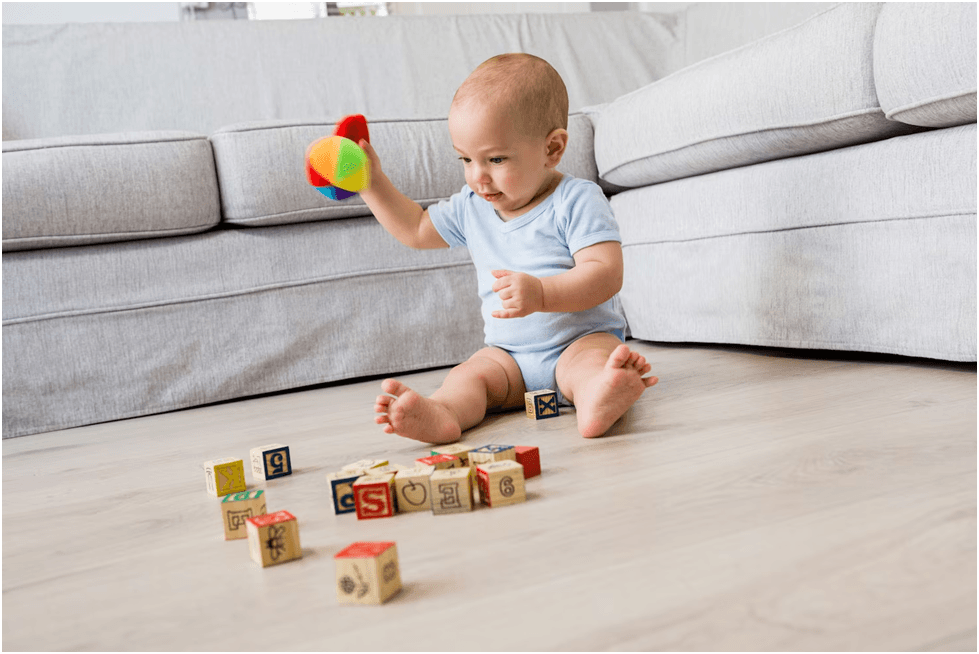
Free play encourages curiosity and creativity. Simple toys, including baby musical toys, support learning when they promote interaction rather than passive entertainment.
Why Independent Play Matters
Short periods of independent play help babies develop focus, curiosity, and problem-solving skills.
Communication Before Words
Language starts long before speech.
Crying, Gestures, and Babbling
These early communication tools teach babies that their actions have meaning and that communication works.
Caregiver Responses Shape Brain Wiring
Consistent responses help strengthen neural pathways related to trust, memory, and learning.
Environment, Stimulation, and Learning
Both genetics and environment influence development.
Daily Interactions and Infant Brain Development
Talking, reading, singing, and everyday routines provide powerful stimulation for infant brain development—no fancy tools required.
Screens vs. Real-World Experiences
Human interaction beats screens every time. Real-world engagement is essential for healthy infant cognitive development.
Invisible Learning Milestones
Not all progress is obvious.
Trusting the Process of Infant Cognitive Development
Skills like attention, memory, and emotional regulation develop quietly. Even when learning isn’t visible, it’s happening.
Conclusion: The Silent Intelligence of Babies
Before babies speak, they are already learning at an extraordinary pace. Through senses, emotions, observation, and play, they build the foundations of thought and communication. Supporting infant brain development doesn’t require perfection—just presence, connection, and curiosity. Silent doesn’t mean simple. It means powerful.
FAQs
- How does infant brain development happen without language?
- Are baby musical toys good for cognitive development?
- What most influences infant cognitive development?
- Can too many toys harm learning?
- Is talking to babies really necessary?
Through sensory input, emotional bonding, observation, and play.
Yes, when used in moderation and paired with human interaction.
Consistent caregiving, emotional security, and daily interaction.
Overstimulation can reduce focus. Simpler toys often support deeper learning.
Absolutely. Language exposure builds neural pathways long before speech begins.
Ready to Get Started?
Join thousands of families who have given their children the gift of perfect pitch
Contact Us